Monday, March 29, 2010

The Mammoth Book of Time Travel Romance

Poor Lars here is a refugee from the Waxed Shirtless Era

The title: The Mammoth Book of Time Travel Romance
The author: Trisha Telep (editor)
Publication: Running Press, 2009
Got it from: MEC, Xmas 2009

Ah, time travel romance. When done right, it's so thoroughly enjoyable. When done wrong, it's oh so wrong.

I feel like I've been reading a lot of romantic short stories lately, and I have to say it's not an easy thing to do well. In the space of about a twenty or so pages you have to introduce your characters and make the reader believe in them and root for their romance. What makes a romance short story really excellent is making the reader feel as though she's seeing all the necessary parts. For instance, there were a number of stories in The Mammoth Book of Vampire Romance that I read last year that were part of a full-length series, and they all fell flat because of the confusing number of characters and unexplained world-building. An author should always assume that the reader is coming to the short story fresh, with no previous history of the characters or the world they inhabit. Short stories should always be able to stand on their own, even if the characters appear in fifty other novels. [End of two cents]

The twenty or so stories in this anthology varied in quality, from good to mediocre to huh? I didn't feel that any of them were worthy of my re-read list, but I did find a lot to amuse me. The hands-down best-written of the bunch was "Stepping Back" by Sara Mackenzie, who proves she's got more writing experience than many of the other authors in this anthology. Her story involves a woman in rural Australia (interesting location!) who is trying to piece together her connection to an abused woman living in the area in 1905. Interestingly, her short story barely has any romance in it and feels like it belongs more in a paranormal or straight time-travel anthology. Jean Johnson's "Steam" was my favourite, a lighthearted and funny steampunk story about a man who discovers sexy pictures of a bespectacled, Edwardian-era woman in his attic and puts together a time machine to meet her, with hilariously predictable results. Another highlight was "Future Date" by A.J. Menden about a kindergarten teacher who can't find a good man and is forced to join an online dating service where men from the future date women from the past. This was the only story that I wish had been book-length because I thought the logistical details would have been fun to tease out. The most truly romantic award definitely has to go to Gwyn Cready's "The Key to Happiness," and I can see why it was chosen to open the book. A woman at a wedding meets a mysterious older man who claims to have been in love with her all his life and that his younger self has, in fact, just been introduced to her as her future husband's best friend. The man has come to warn her about her future if she doesn't follow her heart.

Other stories, like Michelle Maddox's "The Eleventh Hour" have interesting concepts (a woman who helps a little boy is saved by his older self traveling from the future) but the stories fall flat on weak characterizations. Some stories get mired by too much technical jargon or would have been better suited to paranormal fantasies ("Time Trails," "The Walled Garden," "Iron and Hemlock.") "Lost and Found" by Maureen McGowan, about an acid-tripping hippie who keeps waking up on the same day in different years
introduced me to the only romance "hero" I've ever been repulsed by and the "romance" in the story felt genuinely creepy.

Overall, I was left with the impression that the book as a whole could have been a lot better. For starters, I wish authors would consider doing time-travel romance set in different eras besides the already oversaturated market of 18th-century Scotland (can you say Outlander rip-off?) and the 19th century American West. One of the best time-travel short stories I've ever read was set in Puritian New England - now that's unusual! I also wish the stories had dealt strictly with time-travel. That seems like enough to deal with without having to throw in all kinds of other elements like fairies and shape-shifters. Still, I'm willing to forge ahead with The Mammoth Book of Irish Romance (a recent purchase) and am seriously eying The Mammoth Book of Special Ops Romance. One thing you can say about me as a reader is that I'm eternally optimistic that next time things will be better.

If not, I can always go back in time a few months and fix things, right?

Sunday, March 28, 2010

Pondering the reader-heroine

Lately I have been so busy that I haven't had a lot of time for concentrated reading. Alas, then, not a lot of updates here. However, I have a couple of things in the works and there should be a new review up in the next day or so.

What I have been doing mostly the past few weeks is skim-reading a few things and re-reading favourite passages just before I go to bed because my head can't process any new information. One thing I have been enjoying skimming again for the umpteenth time is Beyond Heaving Bosoms. One of the passages, in particular, has been bouncing around in my head for the past few days and has given me much ponderating potential.

From "Chapter Corset: An In-Depth Investigation of the Romance Heroine, Emphasis, Obviously on 'Depth'":

"[Lisa] Kleypas's experience leads her to believe that readers engage in a symbiotic role-play with the heroine to the point where decisions made by the heroine that the reader disagrees with take on a very personal tone; the rigid code of conduct enforced on heroines points at the level to which readers put themselves in the heroine's place, whether or not they actually identify with the particular heroine herself. When the heroine behaves in ways that the reader approves of, she is able to immerse herself as the heroine, and the world of the story is smooth. When the heroine behaves in a way the reader finds unacceptable, however, that particular heroine suddenly stops being strictly a placeholder, and instead becomes a rival for the hero's affections." [emphasis mine]

I think this ties in quite nicely with a realization I had earlier this year, about the make-or-break for a romance novel for me is whether the heroine is more or less intelligent than I am. When a heroine is as smart or smarter than me, I immediately warm to her and enjoy the book thoroughly, with few exceptions. However, when the heroine is quite a few points down the I.Q. scale from me, I quickly become exasperated and lose all patience with the book. And when I say I.Q., I don't necessarily mean strictly book smarts, but social smarts as well. This is one of the reasons why I detested Dizzy from Connie Brockway's As You Desire, despite her being a so-called child prodigy fluent in a bazillion languages: I thought she was a moron.

What I found particularly fascinating is the notion of the heroine being a rival for the reader of the hero's affections. I think this is particularly true in cases where the hero is truly worthy. Dizzy's physical and mental perfection in As You Desire is indeed nauseating, but it would have been even worse if I thought Harry had been worth it (and considering his taste in women, he definitely wasn't). On the other hand, I had to continually fight stabbing pains of jealousy while reading Pride and Prejudice, despite the fact that I loved Lizzy as a heroine. Whether this may in fact be caused by the considerable similarities between myself and Jane Austen's heroine is an interesting notion to ponder.

I think there's definitely something to be said about the reader's identification with the heroine. We seem to be searching for a heroine who walks the fine line between being intelligent but not intimidatingly so. She can't be an idiot (that would disgust both the reader and the hero) but she can't be too perfect, either, or else the placeholder fantasy is broken. For me, romance novel reading isn't so much wish-fulfillment as trying out my own personality in different situations and with different heroes. The flawed heroine must lie somewhere between the impossible perfections of Dizzy and the bumbling foolishness of Bridget Jones (admit it - you'd like everything to work out for you like it did for her, but you sure as heck wouldn't want to be her). There's a reason why Jennifer Cruisie's average-looking, smart heroines are so popular* but the virginal, flawless beauties of old romances are not.

If anybody is reading this, I'd be curious to know: does having a heroine who's too different from you turn you off? Have you ever felt jealous of a heroine who's both wonderful and gets a wonderful hero? Have you ever felt the heroine just didn't deserve the hero (or vice versa)? Am I the only one who wishes the women in romance would behave with the same sense as smart women in real life?

*Although I still cannot see what all the fuss is about and have never warmed to her books.

Monday, March 15, 2010

Drive Me Crazy

The title: Drive Me Crazy
The author: Nancy Warren
Publication: Kensington, 2004
Got it from: Amazon.com

Alex Forrest is the town librarian in sleepy Swiftcurrent, Oregon. She loves her library and being organized and efficient, but her man prospects are dim. Enter rumpled, devil-may-care art professor Duncan Forbes. Duncan is in town ostensibly to work on a book, but this "Indiana Jones of the Art World" is really trying to track down a missing Van Gogh that may have been stolen by Alex's grandfather. Naturally, the professor and the librarian immediately dislike each other despite the sparks flying between them. On his first day in the library, Alex charges Duncan two hundred dollars for underlining in a book - ten dollars for the book, one hundred and ninety for defacing public property.

Things get more complicated the next day when Alex shows up to work and finds a dead body in the stacks - the art section. Naturally, Alex and Duncan have to put aside their differences to solve the mystery together. There's also a side plot involving Alex's troubled cousin Gillian and the town cop Tom Perkins, who was her high school crush.

While the book was fun and light, none of the characters seemed particularly memorable. I found myself not really warming to Duncan and Alex. Duncan seemed too pushy at times and bordered on being an a**hole. Warren played up Alex's prissy-but-dresses-like-a-hooker schtick a little too much. What I found more interesting was Gillian's relationship with Tom and their romance do-over. It seemed more natural and sweeter than Duncan and Alex's immediately hopping into bed routine.
My other problem was the obviousness of the solution to the mystery. You could spot it from so far away you'd have time to do your taxes and go out for coffee before it arrived.* I did enjoy this book, but I can't see myself re-reading it.

*Hint: Alex's key-shaped necklace that she got as a present from her grandfather is mentioned in the opening chapters.

Monday, February 22, 2010

Men of Mystery

The title(s): Men of Mystery: The Bride's Protector; The Stranger She Knew; Her Baby, His Secret
The author: Gayle Wilson
Publication: Harlequin, 1999
Got it from: Freemont Books, 2009

I picked this 3-in-1 book up in a pile of 25 cent romances at the local used bookstore, and I gotta say that for approximately 8 1/2 cents each, they were quite the bargain. I reluctant to post the covers, though, since they're kind of 1990's awful although strangely the more I look at them, the more bizarrely compelling they become. (Hawk looks like Mark Harmon, and Jordan looks like a really young Patrick Duffy, and Griff just has a lot of chest hair going on).

Each of these books can be read on their own, but like a Nora Roberts trilogy it's much more satisfying and everything makes a lot more sense if you read them all together, in order. The three heroes in the series are ex-CIA agents, part of an elite team that assassinates terrorists and other assorted baddies.

The first story, The Bride's Protector, opens shortly after the death of the team's leader, Griff Cabot (or is he dead...? Dun dun dun!) Hawk, who's the team's sniper, has just returned from Baghdad after taking out Griff's killer. Since he's gone all rogue, the feds are on his behind. Meanwhile, ex-model Taylor Stewart is preparing for her wedding to a foreign sheik's son. Having doubts about her wedding, she goes into her fiancee's hotel suite only to see his bodyguards assassinate somebody. She escapes and ends up in Hawk's hotel room. Suddenly he's being accused of the assassination and the two have to go on the run together. The story was very well done, suspenseful and exciting - although the romance took a backseat to the plot.

The second story, The Stranger She Knew features Jordan Cross, who helped Hawk at the end of the last story and now has to change his face to avoid his enemies. Unfortunately the face he ends up with is exactly the same as one Rob Sorrel, who's wanted by the mafia for stealing 16 million. Jordan ends up finding Rob's wife Kathleen and her two small kids and protecting them. At first Kathleen thinks it's her ex-husband, but Wilson thankfully doesn't let the deception linger and Jordan's true identity is revealed. Of all the stories, this one was my favourite. The romance took a much bigger role than the other two stories, but the suspense was top-notch.

The last story, Her Baby, His Secret features Griff's girlfriend, Claire Haywood, who made appearances in the first two stories to help Hawk and Jordan. Claire's secret is that she became pregnant shortly before Griff's "death." When her baby is kidnapped, Griff comes out of hiding to help save their child. I didn't like this story as much as the first two - I found it too suspenseful and the romance wasn't as interesting. But still, for 8 1/2 cents, it was a pretty good read!

There are other books in the "Men of Mystery" series (with much better covers, I'll add) and I wouldn't hesitate to pick them up from another used book store. It's easy to see why Gayle Wilson has won so many RITAs - her books are extremely well-written with interesting plots and characters.


Sunday, February 14, 2010

Valentine's Special: Top 5 Romances

In honour of Valentine's Day, I thought I would highlight my top five romance novels. I am by no means a top romance reader. I don't plow through ten romances a week. I don't read romances that don't interest me. I enjoy what's quirky and different and I avoid like the plague the typical "virgin/rake," "virgin secretary/ruthless boss," "gorgeous model/gorgeous model" storylines that have been done to death. If you've been reading this blog awhile, you'll probably recognize a few of the books on this list. I look forward to modifying it as I continue to read more. In the meantime, here's the romances that I've loved best:


Jewels of the Sun - Nora Roberts

It's not that this is the most outstanding of Roberts' work- it's that it holds so many of the things I love about her stories. Here we have Jude Murray, an American psychologist, giving up her busy life to live in an inherited Irish cottage. Let's count the Roberts-isms: a young woman burned by love who goes to live the simple life and in the process finds herself. Ireland. A trilogy. A family with three gorgeous siblings. Excellent female bonding. A hero who immediately loves and worships the heroine. Fairies. Magic. Destiny. Finding the comforts of home in simplicity. Immediately becoming a success in a chosen career. Roberts' world resembles ours, but it's always so much more comforting and predictable. That's why we love her.

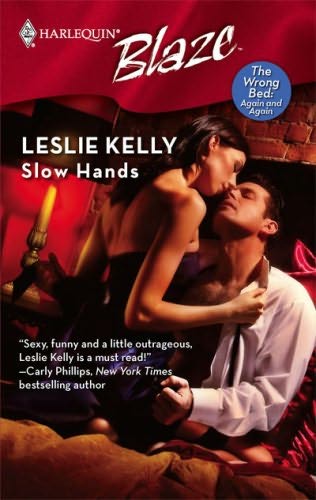
Slow Hands - Leslie Kelly

This book does not deserve the harsh criticism it's gotten on Amazon. I suspect the main reason it's being dogpiled on is because it was given away for free as part of Amazon's 60th anniversary giveaways and a lot of people who don't understand or appreciate romance downloaded it. I don't think people realize how difficult it is to write a good romance and just how crappy some of them can be. Harlequins don't get much better than Leslie Kelly's sweet story about a paramedic mistaken for a gigolo. No, it's not going to win the Pulitzer Prize for Fiction, but it's funny, smart and left me with a big grin on my face.


 Goddess of Spring - P.C. Cast

Maybe it's because I always suspected that Hades was a hottie, but I loooved this book. (My husband disagrees. He thinks that Hades is a whiny crybaby little brother. He just doesn't "get" Hades' tortured soul, obviously...) Me, I say the Greek gods always make things fun. I just love the idea of them interfering in the lives of modern-day mortals (hubby adds, "with sexy results!") Ladies, if you've got a thing for Batman/The Phantom of the Opera/The Beast, you'll know why this is one of Cast's most popular books.

The Devil's Delilah - Loretta Chase

Once she found herself in his arms, she'd decided she might as well let him steal his kiss-only because she was curious-and thereafter reward him with severe bodily harm.

Just thinking about this book makes my eyes water with laughter. It needs to come back into print with an awesome new cover, immediately! It's an absolute crime that there aren't more bumbling, nerdy heroes like Jack Langdon. They are certainly in more abundance in real life than the yawn-worthy "alpha-males" of most romance novels. I say hooray for nerd heroes!

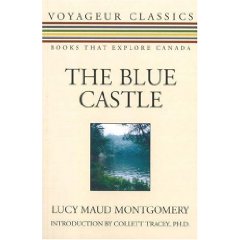
The Blue Castle -LM Montgomery

Though not strictly a "romance novel" in the true sense because it was published in the 1920's, it is essentially just that. And it's my all-time favourite romance. If you buy the lovely Voyageur Classics edition, do yourself a huge favour and skip the awful introduction, which not only gives away the wonderful ending, it completely destroys the romance and magic of this enchanting book. Instead, head straight for Chapter One, where we meet meek and mild Valancy and her despicable clan, arguably one of the most horrifying families in literature. Be prepared for glee when Valancy decides to give her family the finger after a doctor's diagnosis and run off into the woods with bad-boy Barney. What makes this romance soar is the protagonist's slow build to love - none of this love-at-first-sight business. When it finally comes about, it's a joy to observe. Watch for the scene where Barney busts into the backwoods dance, punches out the drunks and flings Valancy out the window: it's sheer heaven.

Monday, February 1, 2010

Fortune Cookie

The title: Fortune Cookie
The author: Heather J. Wood
Publication: Tightrope Books, 2009
Got it from: SC, Xmas 2009

Ever so often I like to try something a little different, and this little novella was the perfect escape from my science/romance/scientific romance month. Coming it at just over 100 pages, it is the fictional diary of Robin Cory, a 24-year-old living in Montreal during 1989. I freely admit that I was initially interested in this book because I am absolutely, positively rabidly insane about the 1980's. (EEEEeee! The 1980's!) 1989 is the perfect year to set a novel about a young woman's awakenings about the world - was there ever a year so packed with important world events? Geez, I feel like singing Billy Joel style: "George Bush, Ayatollah and Rushdie, Exxon Valdez, Tiananmen Square, Berlin Wall, Tremblay v. Daigle, Montreal Massacre. We didn't start the fire..." Unfortunately, because the book was so short, we didn't get nearly enough insight into Robin's thoughts and feelings, which is a shame because she had an interesting voice. Still, it's a promising taste of good things from a new Canadian novelist. Ms. Wood, if you write another book set in Canada in the 1980's, starring a young female protagonist, I will buy it.

The Greatest Show on Earth

The title: The Greatest Show on Earth: The Evidence for Evolution
The author: Richard Dawkins
Publication: Free Press, 2009
Got it from: DC, Xmas 2009

An interesting science book I got for Christmas (besides, ahem, the usual pile of romances) was Richard Dawkins' The Greatest Show on Earth. Dawkins is best-known for his 2006 book The God Delusion and it doesn't seem like he'll be making any friends out of creationists with this book, either. He may be the most famous atheist alive, and that in itself is enough to make him a whipping boy by nutbar religious types.*

I feel for Dawkins, I really do. As a feminist, I know what it is to know something is true and yet nobody believes you. I know what it is to see everybody buying into mass delusion. When I try to explain, for instance, that women are in fact human beings and therefore jokes about their rape and murder are, you know, not funny, they act like there's something wrong with me. So when Dawkins bangs his head against the table because people still deny basic indisputable facts, like the world is billions of years old and evolution is true, I want to metaphorically pat him on the shoulder and murmur, "I know, I know."

Yes, Dawkins is preaching to the choir here. I have been into science for years. I suspect many of the people reading this book will be, too. If you know anything about genetics, for instance, you'll already be one step ahead. What Dawkins is doing here is equivalent to a teacher who's discovered halfway through composition class that his students haven't learned the alphabet yet. He's gone back to the fundamentals of evolution, breaking it down for the uninitiated and refining it for those like me who know the basics but aren't as familiar with some of the particulars. (But I'll admit I breezed through the stuff about plate tectonics and human evolution, having read tons of stuff about these fascinating subjects already. I read books by Spencer Wells and Bryan Sykes with the same fascinated excitement of a fifteen-year-old discovering the Twilight series).

Admittedly, I didn't enjoy the book as much as my husband, maybe because I'm used to the funny and folksy styles of the science writers I do read. I just found some of the minutiae of the science experiments kind of boring. Bacteria and animal life simply aren't my interest, but that doesn't mean I'm sorry they're being studied or that other people find them fascinating. I certainly won't dispute Dawkins's knowledge, his enthusiasm for his subject matter, or the veracity of his claims. It did give me a new appreciation for all life forms and strengthened my belief that evolution is "the only game in town, the greatest show on Earth." Too bad nobody will believe us.

*In her book Godless, the ever insane Ann Coulter wrote, "I defy any of my coreligionists to tell me they do not laugh at the idea of Dawkins burning in hell." Oh Ann, you dog.