Showing posts with label Short Stories. Show all posts
Wednesday, January 4, 2017
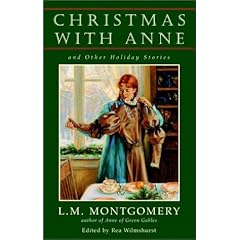
Christmas with Anne
The title: Christmas with Anne and Other Holiday Stories
The author: L.M. Montgomery
Publication: McClelland and Stewart, 1995
Got it from: Mom and dad, Christmas 1996
I reviewed this one before, back when I first started this blog, and reread it again this holiday season. As I mentioned in my original post, the stories definitely lean on the predictable side, especially if you've read other LM works. However, if you're looking for gentle, feel-good stories, this is your book. There's lots of tales of quarreling family members being reunited at Christmas, people learning to be generous to those less fortunate, and mistaken identities inadvertently saving Christmas.
There are two standout stories in this collection (not mentioning Anne's puffed sleeve dress chapter, which Anne fans will all be familiar with.) The first is Katherine Brooke Comes to Green Gables, taken from Anne of Windy Poplars. I love the original story of Katherine Brooke, even more than the version portrayed in the Megan Follows adaptation Anne of Green Gables the Sequel. There's something very Blue Castle-y about Katherine's transformation from bitter spinster to mellow, happy woman, even if it's through Anne's help rather than for herself. It's a nice reminder to enjoy the pleasures of life, and not let unhappiness define us.
The second is a sad story, but its poignancy makes it memorable. In The Unforgotten One, a young maid is grieving the loss of a family member she served, and thinks no one remembers her as the family reunites at Christmas. She slips outside to visit the grave, only to overhear each family member, one by one, visit the dead woman and explain how much they miss her. Montgomery, and Victorian in general, were always close to death, and this story speaks to universal emotion of the bittersweetness of loss.
Monday, April 20, 2015
Double review: Further Chronicles of Avonlea and The Story Girl
The title: Further Chronicles of Avonlea
The author: L.M. Montgomery
Publication: L.C. Page & Company, 1920 (My edition: Seal Books 1987)
Got it from: N.B. c.1993
While I was in the middle of reading one L.M. Montgomery book and listening to another on audio, Anne fandom was hit with a huge blow this past weekend with the death of Jonathan Crombie who played Gilbert in the classic Sullivan films. Two weeks ago at Easter when I reviewed Cool Japan Guide I went down the rabbit hole and started researching the Japanese obsession with Anne, and somehow ended up finding this interview with Crombie. Even though Gilbert of the books will always be my favourite, Gilbert of the movies was everything he should be. A generation of Anne fans will mourn him deeply.
Anne and Gilbert don't make make too many appearances in this follow-up to Chronicles of Avonlea, although Anne does narrate one of the stories. What makes these two collections interesting is that they were written to be published as a whole from the beginning, rather than compiled together from various stories like many of the Montgomery collections that began appearing in the 1990s. The fact that it's set in Avonlea is almost non-essential. Except for a few mentions of peripheral Anne characters, these stories could be set anywhere in Montgomery's beloved turn-of-the-century P.E.I. As always, her stories are full of warmth, humour and the follies of human nature, and I enjoyed them with a few serious caveats.
On the whole the first few stories felt stronger than the last handful and overall I thought Chronicles of Avonlea was stronger than its sequel. Fans of the TV show Road to Avonlea will recognize the story "The Materializing of Cecil," about a spinster who makes up a beau from her past only to have a man with the same name show up in town. "Her Father's Daughter" was a nice story about a girl who reunites with her estranged father on her wedding day. "The Brother Who Failed" shows Montgomery's Victorian sentimentality with her It's a Wonderful Life plot: a brother who feels like a failure is proved to be everyone's hero. "The Son of His Mother" showed Montgomery's near-obsession with sons (she had two herself and was unapologetic in her bias). This story features a mother so obsessed with her son it borders on mental illness.
Each story is worth discussing, but I want to focus on a couple of things that rubbed me the wrong way as a modern reader. "The Education of Betty" has a man raising the daughter of a woman who refused him, and he ends up romantically with the daughter in the end. Yuck. I find May-December romances incredibly creepy, especially when it's the man who's older. Even though the girl in this was 19, I just found the whole concept gross, especially as the "lover" was her father figure growing up.
The other aspect of these stories I can't forgive is their casual racism, even though it was perfectly acceptable at the time. As much as I love Montgomery, holy crap was she racist. She basically looks down on anyone who isn't a white well-to-do Protestant, but it's even more pronounced here. There's a throwaway line at the end of "The Materializing of Cecil" disparaging the Chinese, but you could write a thesis on last story, "Tannis of the Flats," and its depictions of First Nations people. I'm not going to repeat the slurs here but suffice it to say the whole story is based on racist stereotypes and ethnic insults abound. Modern readers will be horrified.
The title: The Story Girl
The author: L.M. Montgomery
Publication: L.C. Page & Company, 1911
Got it from: Hoopla Audiobooks, read by Grace Conlin, 2006
Less racist (although still classist) was my audiobook listen of The Story Girl, which along with its sequel and the Chronicles of Avonlea formed the basis of Road to Avonlea. This is the only one of Montgomery's books that I didn't remember a thing about from having read as a child, except for the scene where the children pay someone for a picture of God. Montgomery has said it was an autobiographical story. It features a summer in the life of a group of clannish cousins, along with their mischievous hired boy Peter and a wet blanket of a friend named Sara Ray. It's narrated by one of the boy cousins, but the true protagonist of the story is Sara Stanley, the narrator's cousin. Although she's not as beautiful as their conceited cousin Felicity, Sara is more beloved for her imagination and her ability to tell marvelous stories. Her tales form many stories-within-stories that often reflect events in the children's lives. Grace Conlin reads beautifully and the oral storytelling in the book makes for a perfect audiobook experience. I expect to follow up with the sequel The Golden Road in the near future.
The author: L.M. Montgomery
Publication: L.C. Page & Company, 1920 (My edition: Seal Books 1987)
Got it from: N.B. c.1993
While I was in the middle of reading one L.M. Montgomery book and listening to another on audio, Anne fandom was hit with a huge blow this past weekend with the death of Jonathan Crombie who played Gilbert in the classic Sullivan films. Two weeks ago at Easter when I reviewed Cool Japan Guide I went down the rabbit hole and started researching the Japanese obsession with Anne, and somehow ended up finding this interview with Crombie. Even though Gilbert of the books will always be my favourite, Gilbert of the movies was everything he should be. A generation of Anne fans will mourn him deeply.
Anne and Gilbert don't make make too many appearances in this follow-up to Chronicles of Avonlea, although Anne does narrate one of the stories. What makes these two collections interesting is that they were written to be published as a whole from the beginning, rather than compiled together from various stories like many of the Montgomery collections that began appearing in the 1990s. The fact that it's set in Avonlea is almost non-essential. Except for a few mentions of peripheral Anne characters, these stories could be set anywhere in Montgomery's beloved turn-of-the-century P.E.I. As always, her stories are full of warmth, humour and the follies of human nature, and I enjoyed them with a few serious caveats.
On the whole the first few stories felt stronger than the last handful and overall I thought Chronicles of Avonlea was stronger than its sequel. Fans of the TV show Road to Avonlea will recognize the story "The Materializing of Cecil," about a spinster who makes up a beau from her past only to have a man with the same name show up in town. "Her Father's Daughter" was a nice story about a girl who reunites with her estranged father on her wedding day. "The Brother Who Failed" shows Montgomery's Victorian sentimentality with her It's a Wonderful Life plot: a brother who feels like a failure is proved to be everyone's hero. "The Son of His Mother" showed Montgomery's near-obsession with sons (she had two herself and was unapologetic in her bias). This story features a mother so obsessed with her son it borders on mental illness.
Each story is worth discussing, but I want to focus on a couple of things that rubbed me the wrong way as a modern reader. "The Education of Betty" has a man raising the daughter of a woman who refused him, and he ends up romantically with the daughter in the end. Yuck. I find May-December romances incredibly creepy, especially when it's the man who's older. Even though the girl in this was 19, I just found the whole concept gross, especially as the "lover" was her father figure growing up.
The other aspect of these stories I can't forgive is their casual racism, even though it was perfectly acceptable at the time. As much as I love Montgomery, holy crap was she racist. She basically looks down on anyone who isn't a white well-to-do Protestant, but it's even more pronounced here. There's a throwaway line at the end of "The Materializing of Cecil" disparaging the Chinese, but you could write a thesis on last story, "Tannis of the Flats," and its depictions of First Nations people. I'm not going to repeat the slurs here but suffice it to say the whole story is based on racist stereotypes and ethnic insults abound. Modern readers will be horrified.
The title: The Story Girl
The author: L.M. Montgomery
Publication: L.C. Page & Company, 1911
Got it from: Hoopla Audiobooks, read by Grace Conlin, 2006
Less racist (although still classist) was my audiobook listen of The Story Girl, which along with its sequel and the Chronicles of Avonlea formed the basis of Road to Avonlea. This is the only one of Montgomery's books that I didn't remember a thing about from having read as a child, except for the scene where the children pay someone for a picture of God. Montgomery has said it was an autobiographical story. It features a summer in the life of a group of clannish cousins, along with their mischievous hired boy Peter and a wet blanket of a friend named Sara Ray. It's narrated by one of the boy cousins, but the true protagonist of the story is Sara Stanley, the narrator's cousin. Although she's not as beautiful as their conceited cousin Felicity, Sara is more beloved for her imagination and her ability to tell marvelous stories. Her tales form many stories-within-stories that often reflect events in the children's lives. Grace Conlin reads beautifully and the oral storytelling in the book makes for a perfect audiobook experience. I expect to follow up with the sequel The Golden Road in the near future.
Labels:
Audiobooks,
Children's,
Classics,
Fiction,
Historical,
Re-reads,
Short Stories
Sunday, February 16, 2014
Chronicles of Avonlea
The title: Chronicles of Avonlea
The author: L.M. Montgomery
Publication: Bantam, 1987 (originally 1912)
Got it from: Library book sale, 1990's
Reading these stories I had to stop and remind myself they were written over 100 years ago. It's easy to forget just how unique a voice Montgomery had and how fresh her stories still feel. I understand them, and Montgomery herself, far more now than when I first read her works twenty years ago as a little girl. Compared to her moralizing contemporaries, Montgomery's characters are just so much more complex. No one is ever really a villain in Avonlea, just misunderstood or misinformed. And her "goodies" are never purely saints. They do give in to temptation now and again.
But what really made these stories a delightful surprise is the sheer number of older characters finding romance. People in their thirties, forties and even beyond find true love, whether for the first time or with old lovers. I can only imagine how subversive this must have seemed in rural early 20th century Canada. If women in their forties are described as being "past their bloom," it is always because of their unhappy personalities. The happy and lighthearted are described as beautiful, no matter what their age. And, most importantly, their romances are never mocked and always feel well-deserved. Even when the stories occasionally become hokey or old-fashioned, the overarching power of romance makes you root for the people in them. If I had to live in the past, Montgomery's fictional Avonlea wouldn't be a bad place to be.
Labels:
Children's,
Classics,
Fiction,
Historical,
Re-reads,
Short Stories
A Cat, a Hat and a Piece of String
The title: A Cat, a Hat and a Piece of String
The author: Joanne Harris
Publication: Doubleday, 2012
Got it from: The library
Joanne Harris is best known for her novel Chocolat, and I was interested in reading this volume of her short stories with a touch of magic realism. As in Chocolat, the symbolism of food plays a large role in many of her tales. In "Cookie," a woman addicted to the comfort of pastries may be giving birth to something made of sugar, spice and everything yeasty. In "Muse," the narrator lovingly describes a greasy spoon train station cafe, complete with buttery bacon sandwiches. (This short story also has one of the funniest lines: in several of the stories, including this one, the Gods appear in human disguise. Quoth the narrator: "The Muse is just an archetype; a metaphor that represents Mankind's eternal striving. To imagine that they might be real, able to take on human affairs - well, that's just silly. Isn't it? It's the sort of thing Jennifer [his wife] might read in a book of short stories written by the kind of frivolous woman writer who happens to like that sort of thing.")
If there's one overarching theme amongst these stories (some of which are interconnected), it's love in strange places. Let's count them: 1. A woman obsessed with her son thinks his ghost may be appearing on a Twitter feed. 2. A woman carries on a heavy romance with a tree. 3. A man is smitten with Christmas to the point of driving his wife away. 4. A man and woman fall in love with each other through the radio. 5. A former actor falls in love with the house he's renovating and its former inhabitants. Etc.
Even though the stories could be unsettling, they left me with a sense of hopefulness. A pair of the stories dealt with the plight of two intelligent older ladies trapped in a retirement home at the mercy of some very unintelligent and mean-spirited administrators. These could have left me despairing the way the elderly are cared for at the end of their lives, but instead it showed the subtle ways people can fight back against oppression. Well done.
Monday, July 15, 2013
Queen Victoria's Book of Spells
The title: Queen Victoria's Book of Spells: An Anthology of Gaslamp Fantasy
The author: Ellen Datlow and Terri Windling (editors)
Publication: Tor Books, 2013
Got it from: The library
"Gaslamp fantasy," as the introduction to this book explains, is a work of fantasy set at any time during the era of gaslamps (primarily the nineteenth century). The idea immediately conjures up steampunk, although that is just one subgenre of gaslamp. (Incidentally, only one of the short stories in this anthology is what I would call steampunk: "Their Monstrous Minds," a Frankenstein retelling by Tanith Lee.) The stories in this collection are all over the place: some deal with Queen Victoria, others with subjects like the Great Exhibition, the Pre-Raphaelite Brotherhood, Dickens, the cholera epidemic and spiritualism. All the stories have some aspect of the fantastic.
As with any collection of short stories, I enjoyed some more than others. The most lighthearted is the title story by Delia Sherman, in which a modern-day scholar discovers that Queen Victoria may have used magic for her own selfish ends. "The Unwanted Women of Surrey" by Kaaron Warren highlights the vulnerability of women who were considered mentally ill in the Victorian era, set amidst the Broad Street cholera outbreak of 1854 (an event I've been interested in since reading Steven Johnson's fascinating book The Ghost Map.) "Estella Saves the Village" by Theodora Goss is a fun story of Victorian literature lovers as it imagines a village inhabited by characters from Great Expectations, Middlemarch, Jane Eyre and Sherlock Holmes, etc and in which Estella must solve a mystery a la Flavia de Luce. The real reason I picked up this book was for Ellen Kushner and Caroline Stevermer's "The Vital Importance of the Superficial." Fans of Sorcery & Cecelia will not be disappointed by this laugh-out-loud story told in letters.
But if I remember one story above all others, it will be James P. Blaylock's fascinating and eerie"Smithfield." In it, Arthur Conan Doyle is photographing a street on London on the last night before it gets electricity. It's a brilliant meditation on what we lose with progress. With perpetual daylight, have we lost the ghosts of the past? It perfectly encapsulates what I find fascinating about the nineteenth century, which I consider the key turning point in history, where the old world meets the modern one. At the end of the story Blaylock states, "I'm not at all fond of the idea that the world as I've come to know it is passing away." Any thoughtful person would agree.
The author: Ellen Datlow and Terri Windling (editors)
Publication: Tor Books, 2013
Got it from: The library
"Gaslamp fantasy," as the introduction to this book explains, is a work of fantasy set at any time during the era of gaslamps (primarily the nineteenth century). The idea immediately conjures up steampunk, although that is just one subgenre of gaslamp. (Incidentally, only one of the short stories in this anthology is what I would call steampunk: "Their Monstrous Minds," a Frankenstein retelling by Tanith Lee.) The stories in this collection are all over the place: some deal with Queen Victoria, others with subjects like the Great Exhibition, the Pre-Raphaelite Brotherhood, Dickens, the cholera epidemic and spiritualism. All the stories have some aspect of the fantastic.
As with any collection of short stories, I enjoyed some more than others. The most lighthearted is the title story by Delia Sherman, in which a modern-day scholar discovers that Queen Victoria may have used magic for her own selfish ends. "The Unwanted Women of Surrey" by Kaaron Warren highlights the vulnerability of women who were considered mentally ill in the Victorian era, set amidst the Broad Street cholera outbreak of 1854 (an event I've been interested in since reading Steven Johnson's fascinating book The Ghost Map.) "Estella Saves the Village" by Theodora Goss is a fun story of Victorian literature lovers as it imagines a village inhabited by characters from Great Expectations, Middlemarch, Jane Eyre and Sherlock Holmes, etc and in which Estella must solve a mystery a la Flavia de Luce. The real reason I picked up this book was for Ellen Kushner and Caroline Stevermer's "The Vital Importance of the Superficial." Fans of Sorcery & Cecelia will not be disappointed by this laugh-out-loud story told in letters.
But if I remember one story above all others, it will be James P. Blaylock's fascinating and eerie"Smithfield." In it, Arthur Conan Doyle is photographing a street on London on the last night before it gets electricity. It's a brilliant meditation on what we lose with progress. With perpetual daylight, have we lost the ghosts of the past? It perfectly encapsulates what I find fascinating about the nineteenth century, which I consider the key turning point in history, where the old world meets the modern one. At the end of the story Blaylock states, "I'm not at all fond of the idea that the world as I've come to know it is passing away." Any thoughtful person would agree.
Saturday, November 26, 2011
Black Heart, Ivory Bones
The title: Black Heart, Ivory Bones
The author: Ellen Datlow & Terri Windling (eds.)
Publication: HarperCollins, 2000
Got it from: Vancouver, Chapters, 2001
I bought this book in Vancouver over ten years ago and for some reason, it's taken me this long to get around to it. This year I resolved to finally tackle it and put it to my all-important reading list. It's a collection of re-told fairy tales, some by very famous fantasy writers (Charles de Lint, Tanith Lee), some by authors who weren't nearly as famous then as they are now (Neil Gaiman, Susannah Clarke) and others who remain obscure.
Like many short story collections, the quality of these stories varied widely. Some of them, like "Rapunzel" were obviously linked to specific fairy tales, others were vaguely fairy tale in theme. Some were gritty and modern ("Big Hair" was about teenage beauty pageants, "Goldilocks Tells All" was like a Jerry Springer show involving psychiatry, "The Red Boots" made me think of a strange lesbian country-and-western song). I didn't like the ones that were gross or violent, like "Rosie's Dance" and "My Life as a Bird." "The Cats of San Martino" by Ellen Steiber was a fun story on its own, while, "You, Little Match Girl" was a haunting tale that accomplished a great deal of emotion in just a few short pages. Interestingly, "Mr. Simonelli, or The Fairy Widower" from Susannah Clarke's other short story collection The Ladies of Grace Adieu, first appeared here, long before Jonathan Strange & Mr. Norrell was first published, and it is an excellent story, well worth re-reading. Was this collection worth waiting ten years for? Probably not, but it wasn't entirely a waste of time.
Monday, May 24, 2010
Too Much Happiness
The title: Too Much Happiness
The author: Alice Munro
Publication: McClelland & Stewart, 2009
Got it from: DC, Xmas 2009
Having never read any Alice Munro stories, and hearing so many great things about this author, I was curious to read her latest acclaimed book. I wasn't sure what to expect, but this is probably my most different reading experience of the past five years.
Munro's writing is technically brilliant, and she takes you to places you don't expect. "Dimensions" is the story of a young woman visiting her husband in jail for committing a crime that you don't discover until the end, so repulsive that it makes you visibly uncomfortable. "Wenlock Edge" starts out as a seemingly normal story of a girl and her roommate, only to evolve into something bizarre as the narrator is invited into a dinner party where she is asked to strip naked for an older man and read him stories. I found this story to be the "humorous" one of the bunch and I mean humorous in a weirdly creepy sort of way. "Free Radicals" had me on edge, worried as a killer on the loose dines with a widowed old lady whose home he had broken into. The most interesting story (for me), "Child's Play," deals with two girls and their obsession with a mentally challenged girl decades ago and how fear of the unknown can lead to terrible consequences.
Don't read these stories if you are looking for a light read, where everything is spelled out for you and the endings are happy. I'm going to be honest and say that I didn't like this book. It wasn't my cup of tea at all, but I do appreciated that it made me think and I still can't figure out all the hidden symbolism and meaning in these stories. My only suggestion is that if you do read this book, it is with an open mind and no expectations.
Saturday, December 27, 2008
61. Christmas with Anne
The title: Christmas with Anne and Other Holiday Stories
The author: L.M. Montgomery
Publication: McClelland and Stewart, 1995
Got it from: Mom and dad, Christmas 1996
Christmas Day may be officially over, but here at Reading Outside the Lines it goes on and on (and on, and on as a Journey song that shall remain nameless gets stuck in my head). That's good! In all fairness, at least two of these stories take place at New Year's. That counts, doesn't it?
Okay, okay. This one was purely sentimental. It's overly treacly in parts and downright predictable, but isn't that what Christmas is all about? It made me feel all warm and fuzzy inside, which is just as it should be at Christmas. B.
Tuesday, May 13, 2008
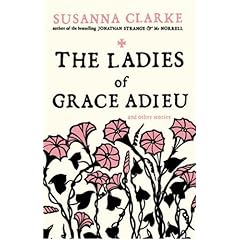
20. The Ladies of Grace Adieu
The title: The Ladies of Grace Adieu
The author: Susanna Clarke
Publication: Bloomsbury, 2006
Got it from: Amazon
Can I just gush for a minute about the cover? I love love love it. As someone, somewhere on the internet said, "the outside is just like the inside!" Call me creepy, but when this book came in the mail I couldn't stop caressing it, it was so soft. Ah, I am such a book fetishist.
This book is a companion to Jonathan Strange & Mr. Norrell, which I read last year and adored. The thing I love most about Susanna Clarke as an author is that she really makes it worthwhile for smart readers who are paying attention. In other words, she doesn't club you over the head with the obvious, which surprising few authors know how to do nowadays. As someone who is well-versed in both Regency and fairy literature, I found both Jonathan Strange and this book to be howlingly funny, while most readers I imagine would be painfully bored.
The best analogy I could think of to describe Clarke's books is this: imagine a lake that everyone goes to visit, because it's a well-talked about lake. Most people would go, say, "oh what a pretty lake, but I don't see what the fuss is about, it's kind of boring and nothing's really happening," and move on. But some people would take the time to stand on the shore and look into the lake. And if they were paying attention, they would start to see all kinds of delightful creatures, like giant orange fish and swimming turtles and wavy seaweed and maybe a monster or two.
This book is a collection of short stories, which is definitely a departure for me. I almost never read short stories, because I hate getting to know a set of characters, only to have to leave them a short while later and start all over again. (An exception to this is Budge Wilson's short stories). On the other hand, if I don't like the story, at least I know I can leave it in a few short pages.
What else can I say about this book? It's closely tied to Jonathan Strange & Mr. Norrell, so I wouldn't recommend reading it unless you've read that book first. Think of it as Silmarillion to Lord of the Rings, only less tedious. Any flaws I might point out about this book are somehow argued down in my mind with, "but it's about fairiessss! And the Regency! That's like complaining about chocolate mousse when all you've had lately is turnips. Maybe it's a little runny, but it's chocolate mousse for goodness' sake!" B+
Subscribe to:
Posts (Atom)